.
.
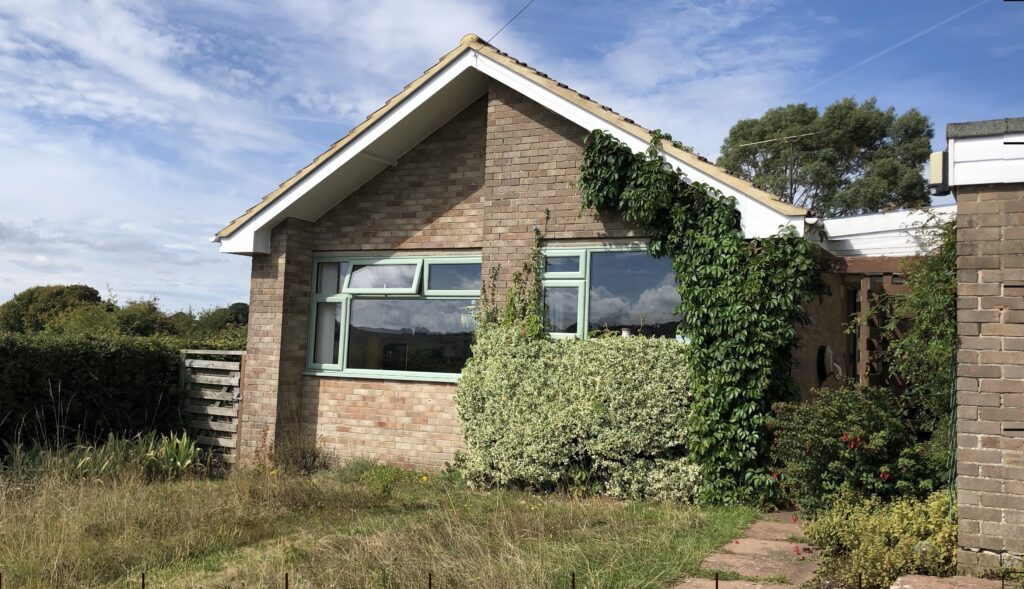
The dwelling is a detached 3-bed bungalow. It has in a fairly-exposed position on a hillside, but living room has big windows facing south and west, so provides passive heating on sunny days. The house is occupied all day as the owners work from home.
Insulation
- Cavity wall insulation
- Loft insulation 300mmm
- Insulated plasterboard for office (north facing)
.
Systems installed (with date of installation)
- Solar hot water (c2006, Jim Shearman, Bridport)
- Solar PV 3Kw (Nov 2011, Wessex Renewables)
- Air Source Heat Pump (Feb 2021, Dorset Energy Solutions)
.
Solar hot water
A solar hot water system has supplied the house with free hot water throughout the summer and on sunny spring and autumn days – and also does a smaller amount in sunny winter days. Cost figures haven’t been kept, but the owners are confident it has easily paid for itself. It may have been made redundant by the iBoost system (see below). The system would occasionally overheat on really hot, sunny days in the past, but it got through the most recent summer without a problem. It derives a small income from what known as the Renewable Heat Initiative (approx. £250/year).
.
Solar PV
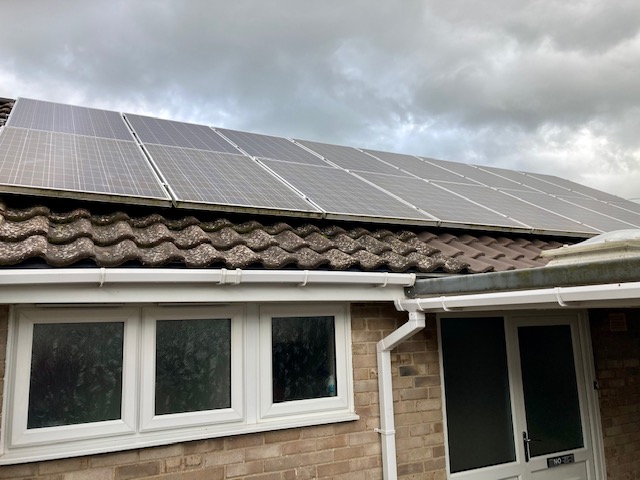
Six panels, nominal 3Kw, are sited on the west-southwest facing roof. These work best on sunny afternoons/evenings but nearly always generate something, even on overcast days. The daily output varies hugely from 1-2kwh (on shorter winter days) to 20-22kwh (on long sunny summer days). The only problem that’s been experienced has been the failure of an inverter in the first year (quickly replaced under warranty).
Due to the timing of the installation, the owners were lucky to be included in the previous FiT system, so receive c. 40p/unit generated (43p/unit for those exported to the grid, assumed to be 50% of output). The only regret for the owners is that they didn’t cover the whole roof with panels! Back then, however, although the FiT was generous, there was no help with the scary upfront cost.
The installation requires no maintenance.
- Installation cost – £10,915.00
- Income (2020) – £1,524.79
.
Air source heat pump
LG 9kW heat pump. The owners took the plunge with the heat pump because of the £5,000 grant available and because the gas boiler was 28 years old, spares were getting difficult to find and it would need replacing (at estimated £4-5,000) in the near future. As with all installations of this type,there was a desire to reduce the owners’ carbon footprint. Installation took a week and included a new hot water tank and four new bigger dual-row radiators plus a smaller rad in the kitchen. The heat pump itself is mounted just outside the house on rubber ‘feet’ – no vibration, just a background hum when it kicks in, which no one notices any more.
Cost includes an iBoost (approx. £300) which diverts any excess power from PV panels into heating the hot water (thus giving the heat pump a slightly easier job). It takes longer than gas central heating to get the radiators warm – 30-40mins instead of 10mins and water is less hot, but it keeps us warm on cold evenings, just the same! And sometimes, the portable thermostat is moved to a colder room to ‘wake it up.’
Energy use is dramatically less than with the old gas/electric system (see below) but cost saving is only £125/year – take the PV panel income into account though, and the upfront cost should be covered in around five years.
- Installation cost – £12,950 (minus £5,000 grant)
- Cost comparison with gas central heating/electric:
- Gas/electric (2020) – £633.94 (7,692kwh)
- Heat pump (2021/22) – £508.21 (2,529.8kwh)
.
Conclusion
The owners say: “All our installations have been well worth doing. The PV panels and solar water panel have covered their original costs and continue saving money. The heat pump has delivered lower cost savings so far but has drastically cut our overall energy use, which is good for reducing the effects of climate change, even when using renewable energy (supplied by Octopus in this case). we would recommend anyone considering a heat pump to fit PV panels as well – high upfront cost but a good long-term investment as it will pay for itself over time.”
NB: All energy costs are based on what was paid at the time – obviously these are now in a state of flux. The generous FiT has gone but PV panel prices have plummeted.